
Have you ever read a caption and found yourself nodding along before you’d even decided to? That’s usually not luck. It’s often a Yes Set.
The Yes Set is one of the simplest NLP language patterns, and one of the most useful if you run a coaching business. In this post I’ll share what it is, how it works, the 10 question starters I teach on my NLP Practitioner course, and how to write your own in ten minutes.
What is the Yes Set?
The Yes Set is a set of questions or statements, using Milton Model language patterns, that creates a series of internal representations for the listener. In plain English: it’s a string of things your reader says yes to, and each yes builds a picture in their mind.
By the end of the set, taking the next step feels natural. Not because you’ve pushed, but because you’ve met them where they are and walked with them.
How does the Yes Set work?
It works by pacing and leading.
- Pacing: you start with things that are already true for the person. Their situation, their experience, what they’ve been through.
- Leading: once you’re in rapport, you lead them gently towards a new idea, a solution or an action.
It uses Milton Model patterns like tag questions (“aren’t you?”, “can’t you?”) and mind reads (“I know that you…”).
A Yes Set example
Here’s one I came up with live in a session this week:
“I know that you’re thinking of becoming a life coach. And you’re doing really well in your current job, but you’re feeling a bit tired of it now. You can see your capabilities and how much is possible for you. And you’re ready now for a new challenge, aren’t you?”
Notice how the first few lines are just true for that person. By the time you get to the question at the end, they’ve already said yes three times in their head.
The 10 Yes Set question starters
These are the starters I give my students. Pick the outcome you help people with, then fill in each one.
- Wouldn’t you like to / wouldn’t you love to…?
- Isn’t it time to…?
- Are you tired of…?
- Can you imagine…?
- Are you drowning in…?
- You can see yourself…, can’t you?
- Do you notice how good it feels when…?
- Do you want…?
- Did you ever ask yourself…?
- Are you interested in…?
How to write your own Yes Set in 10 minutes
- Choose one outcome. More confidence, more motivation, getting fitter, being pain-free, better daily habits.
- Work through the starters. Fill in each one for that outcome. If one doesn’t fit, skip it.
- Read it out loud. Does it sound like you? Change any words that don’t.
For confidence, it might start like this: “Wouldn’t you love to feel much more confident in yourself? Isn’t it time to take action and gain more confidence? Are you tired of not doing the things you really want to do because of your lack of confidence? Can you imagine…?”
Two tips to make your Yes Set land
- Make it sensory. People take in the world in different ways. Some see it, some hear it, some feel it. Weave in “Can you see…”, “Can you hear…” and “Can you feel…” so everyone gets a picture that works for them.
- Make it specific. “You can see yourself getting back to golf, can’t you?” is far more powerful than “doing the things you love”.
Does it matter if I’m wordy?
No. One of my students said she’s far too wordy for punchy copy. But the purpose of a Yes Set is to create a series of pictures that naturally lead someone to take action. Wordy or concise, if you’re pacing and leading in a way that builds rapport, it works.
Where can you use the Yes Set?
- Social media captions and posts
- Emails, sales pages and ads
- Sales conversations and discovery calls
- Coaching sessions, when a client can’t come up with their own idea or solution
- Training your AI tools to write in your own voice
Frequently asked questions
What is the Yes Set in NLP?
The Yes Set is an NLP language pattern made up of questions or statements the listener agrees with. It paces their current experience, then leads them to a new idea or action.
Is the Yes Set manipulative?
Not when it’s used well. It’s about communicating in a way that lands for the other person, not forcing a decision that won’t support them. If there’s no genuine need, there’s no sale.
What is pacing and leading in NLP?
Pacing means matching someone’s current experience so they feel understood. Leading means guiding them, once you’re in rapport, towards a new way of thinking or a next step.
Can I use the Yes Set in coaching?
Yes. It’s useful when a client is stuck and can’t see their own options. Pace where they’ve been, then lead them to a possibility they hadn’t considered.
Want to learn the full NLP toolkit?
The Yes Set is just one of the language patterns we cover on my accredited NLP Practitioner & Breakthrough Coaching course, alongside the Milton Model, the Meta Model, rapport, values and the 5-step sales process. The next cohort starts on the 23rd of October.
If you’d like to dip your toe in first, my £47 introductory courses are a lovely place to start.
Thinking of deepening your coaching skills? Our intro courses for just £47 are the best place to start!
Life Coach Diploma
Learn the foundations of powerful coaching conversations and how to support others to move forward with clarity and confidence. – CHECK IT OUT
EFT (Emotional Freedom Technique) Training
Discover how tapping techniques can help release emotional blocks and support change quickly and effectively. – CHECK IT OUT
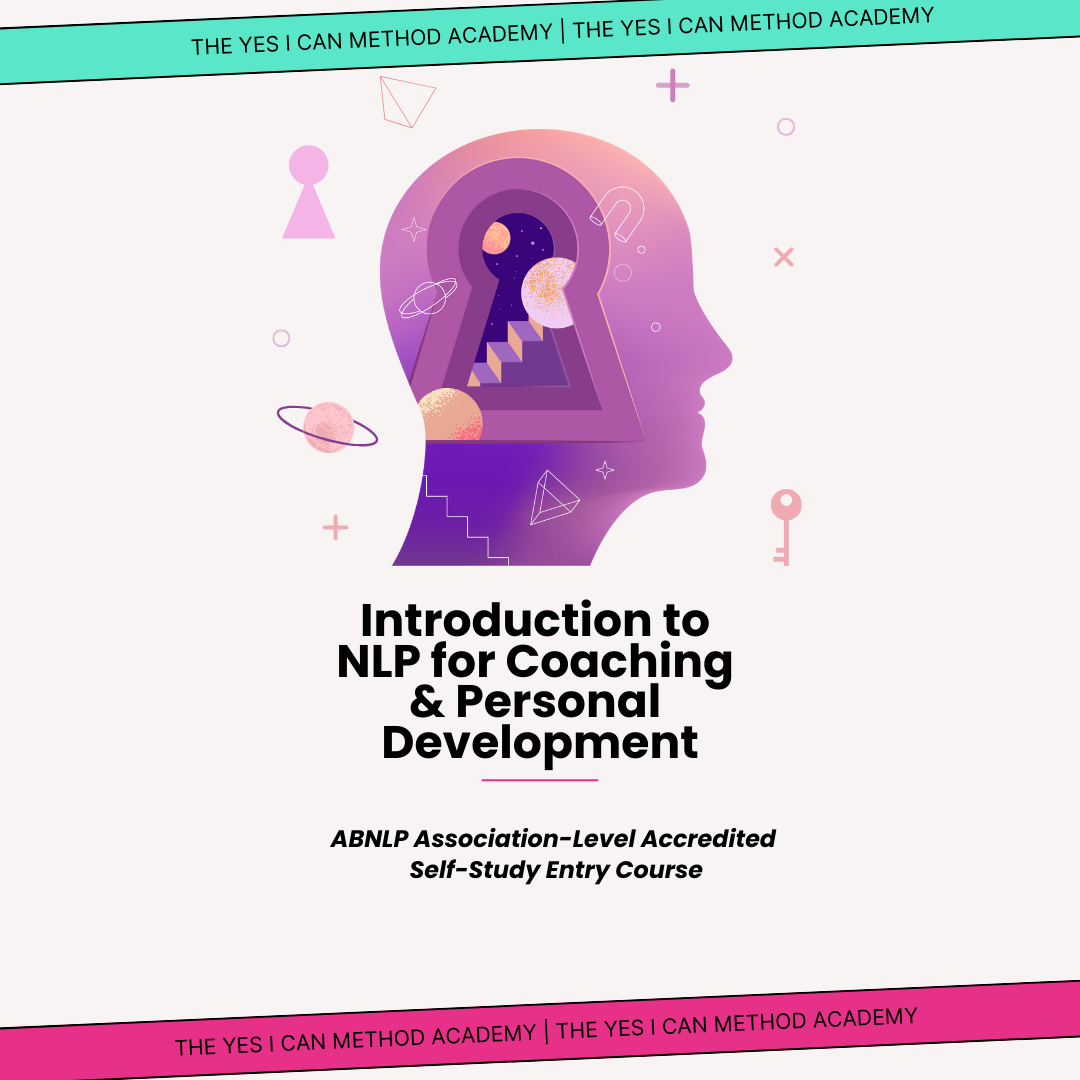
Introduction to NLP
Explore the fundamentals of Neuro-Linguistic Programming and learn how thoughts, language and behaviour patterns shape our results. – CHECK IT OUT
Whether you’re looking to develop professionally, support others, or simply understand yourself on a deeper level, there’s a training that will support you.
👉 We also have deeper, longer and much more in depth courses in NLP and Coaching.
